Economic Updates for June 2025

Summary

Between Deficits and Earnings: Decoding the Market’s Calm

Over the past 30 days, the markets have remained remarkably stable despite a barrage of news headlines. Macroeconomic data has also shown little change during this period. Some of the softness seen in the "soft" data appears to be quietly reversing, while the "hard" data has continued to hold firm.

During this time, we’ve seen the U.S. dollar sell off, long-term yields rise, and the eruption of yet another hot war in the Middle East.

Prominent market strategists—from Jeremy Grantham and Jeffrey Gundlach to Paul Tudor Jones—have issued warnings about the inevitable damage high deficits may inflict on the U.S. economy. In contrast, other strategists have taken a more optimistic stance, downplaying long-term concerns and instead highlighting the continued growth in corporate earnings and the potential for a positive trajectory in equity markets through the end of the year.

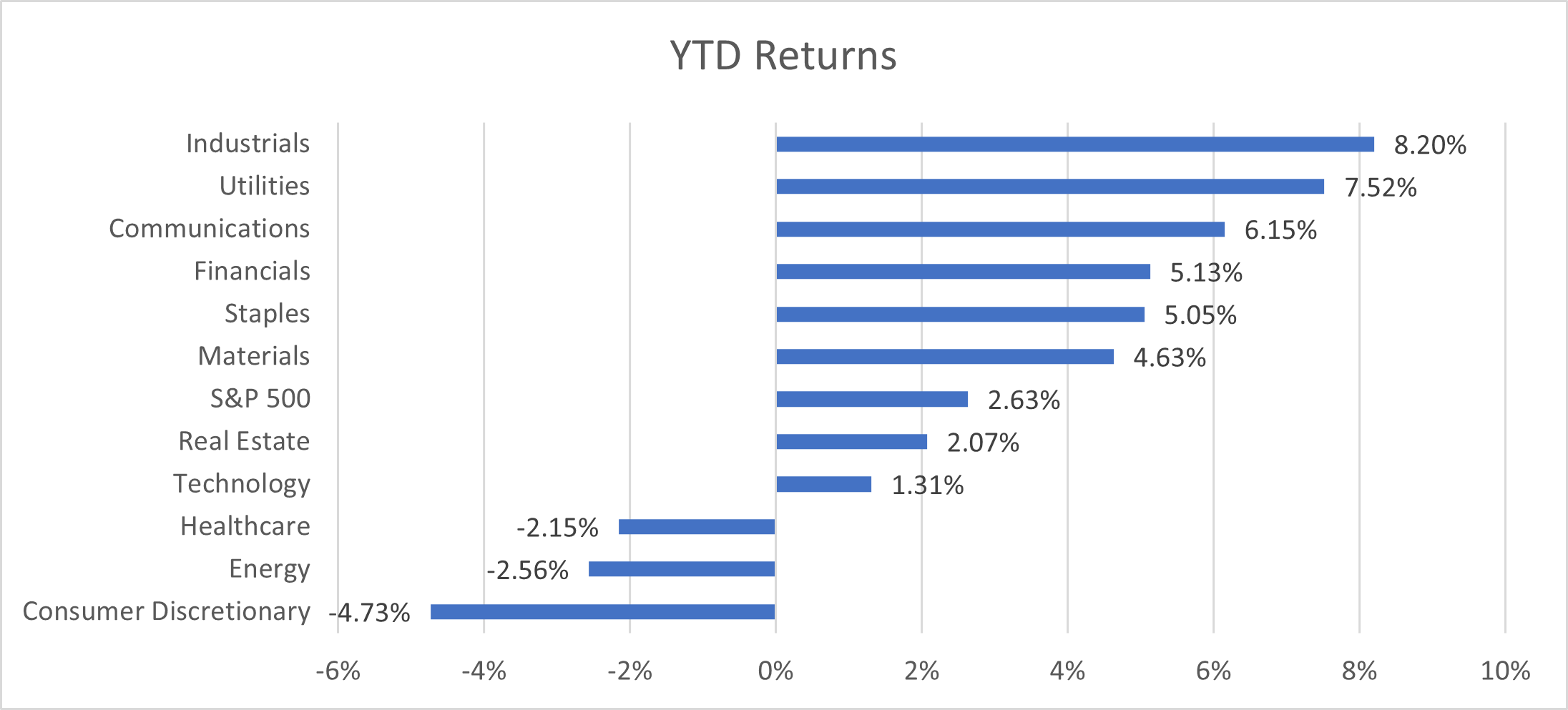
So far this year, traditional value stocks and the old industrial economy have outperformed the new tech-driven sector. If the economy can avoid a tariff-induced recession, the secular growth narrative may regain momentum. As the ever-optimistic Ed Yardeni might put it, the underlying bullishness remains intact.

Broad Indicators

Atlanta GDP NowCast

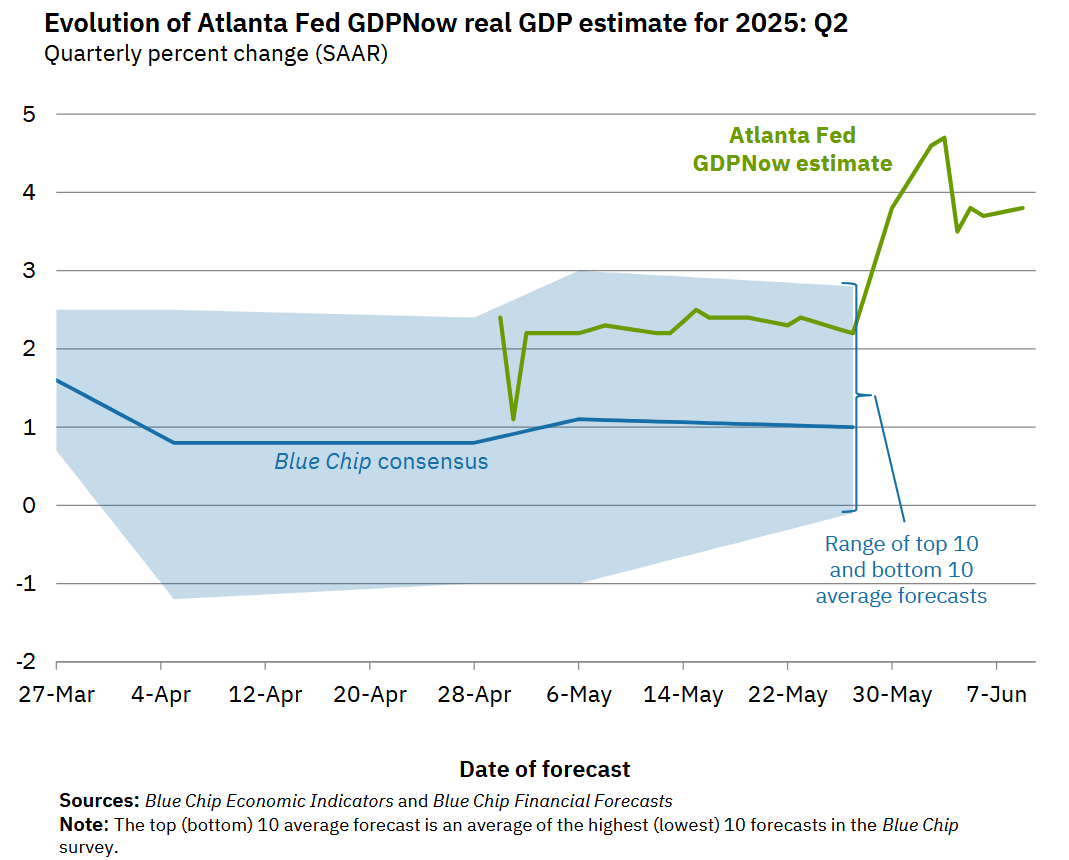
Atlanta FED GDPNow estimate for Q2 2025 isclosing in on 4%. After the tariff tantrums, we seem to be back on track. Some analysts think we are yet to see the impact of tariffs which is likely to show up in holiday sales later this year.
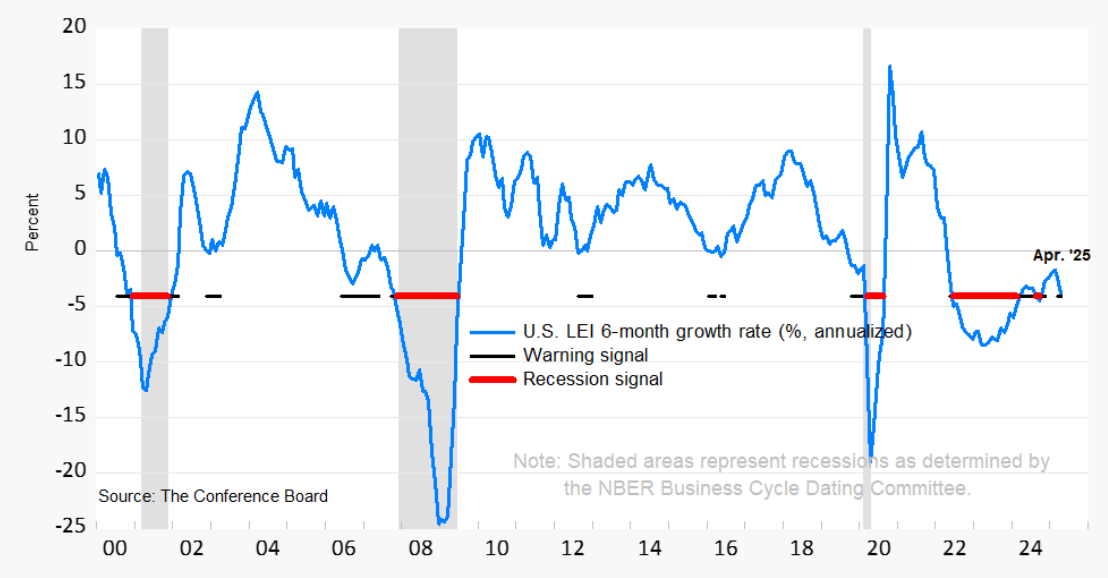
Conference Board's Leading Economic Indicator

The LEI has been bouncing over the recession line a few times. Most recently, it is slightly above the recession line after the tariff tantrums in April.

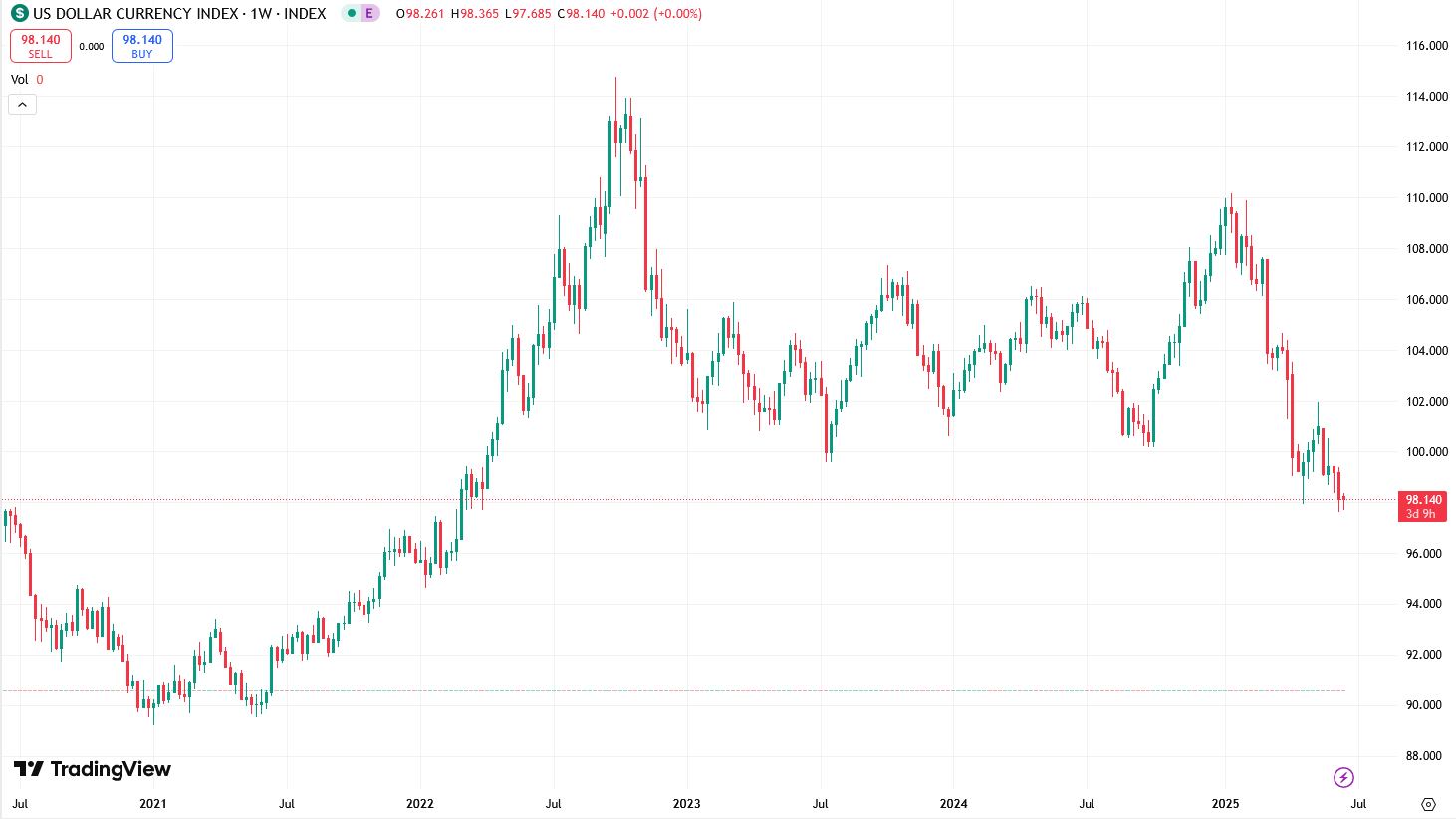
US Dollar Index

USD has steadied a bit after the conspicuous fall early in April.

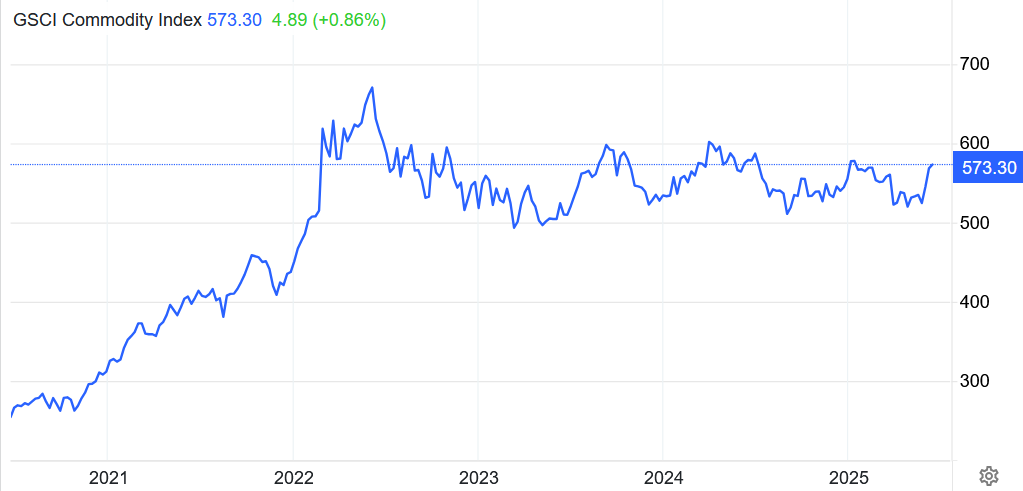
Commodities

Commodity prices have been range bound for the last few years. The middle east escalation of war has contributed to heightened volatility in this market.

Gold

Gold has been marching higher steadily with the 10 year rates climbing.
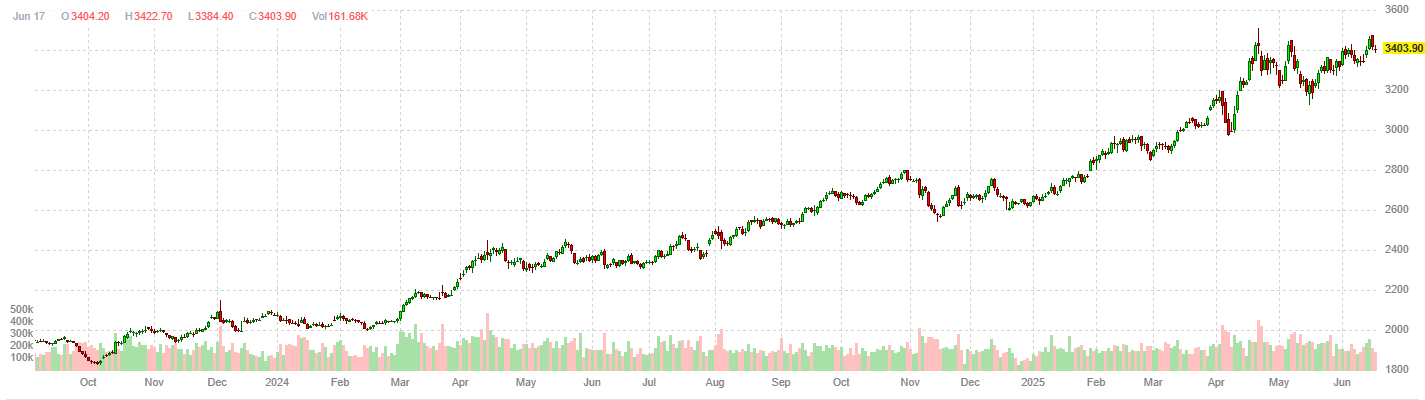
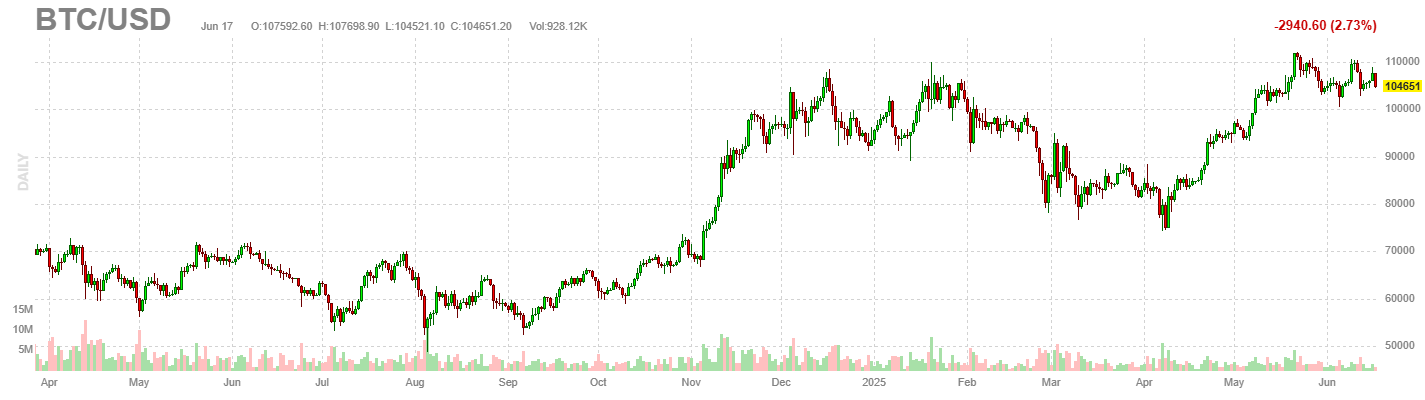
Bitcoin

BitCoin continues to behave like a risk asset. It has shot up to its previous all time high since the deal with China on tariffs.
Inflation

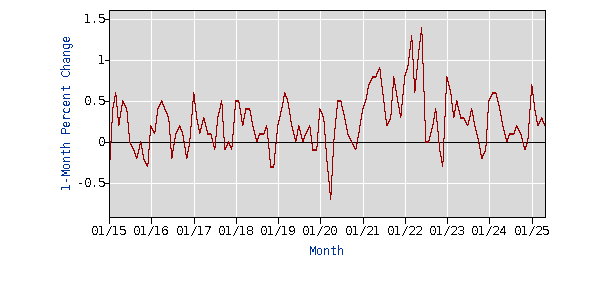
CPI Month over Month

The core CPI reading is likely to trend lower as the shelter component fades out. The overall CPI reading for the month of May 2025 was 0.2%.

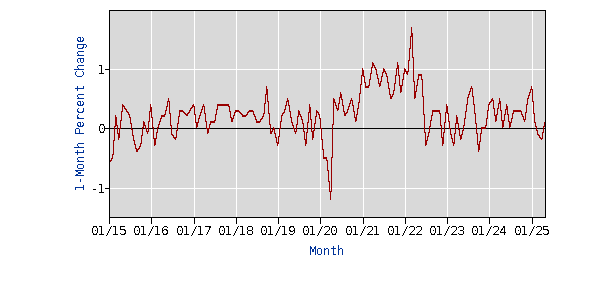
PPI Month over Month

PPI is projected to climb by 0.1% for May 2025.

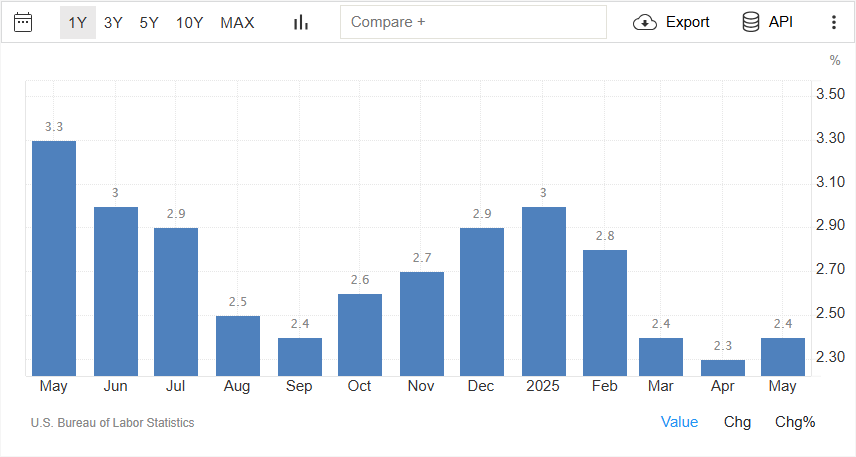
Reported Year over Year Inflation Rate

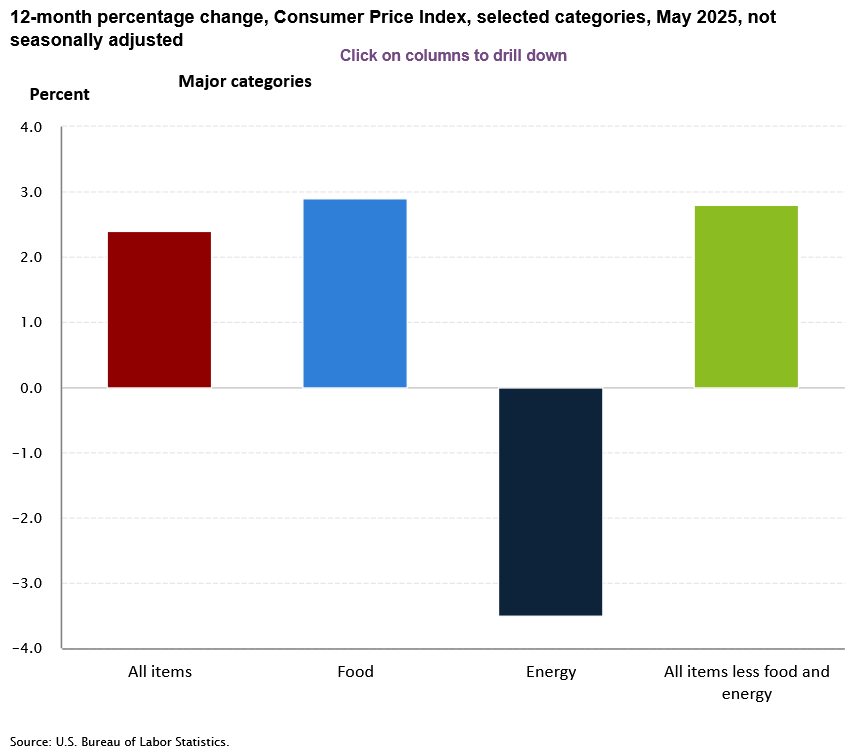
This is the headline inflation number that everyone talks about. For May 2025 we are at 2.4%.

CPI Components

CPI Components Last Month
Source BLS.gov Consumer Price Index
CPI Components This Month
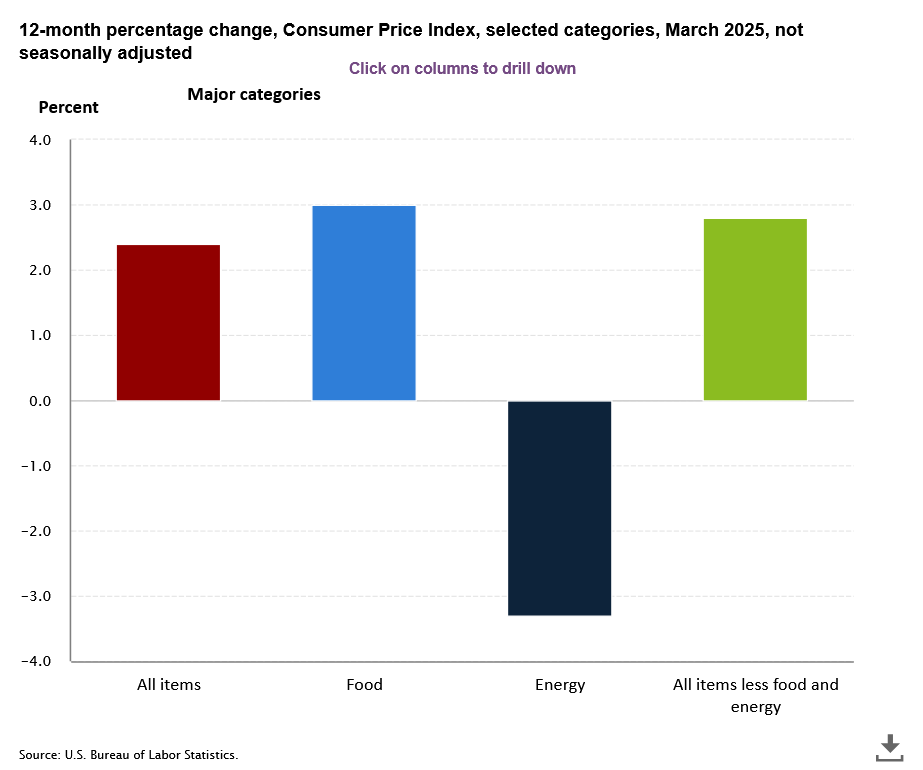
The contributors to the inflation have been mainly food and transportation. The decline in energy prices have helped tame inflation. (Please note that the y-axis in both the graphs have different scales).

One Year Inflation Expectations

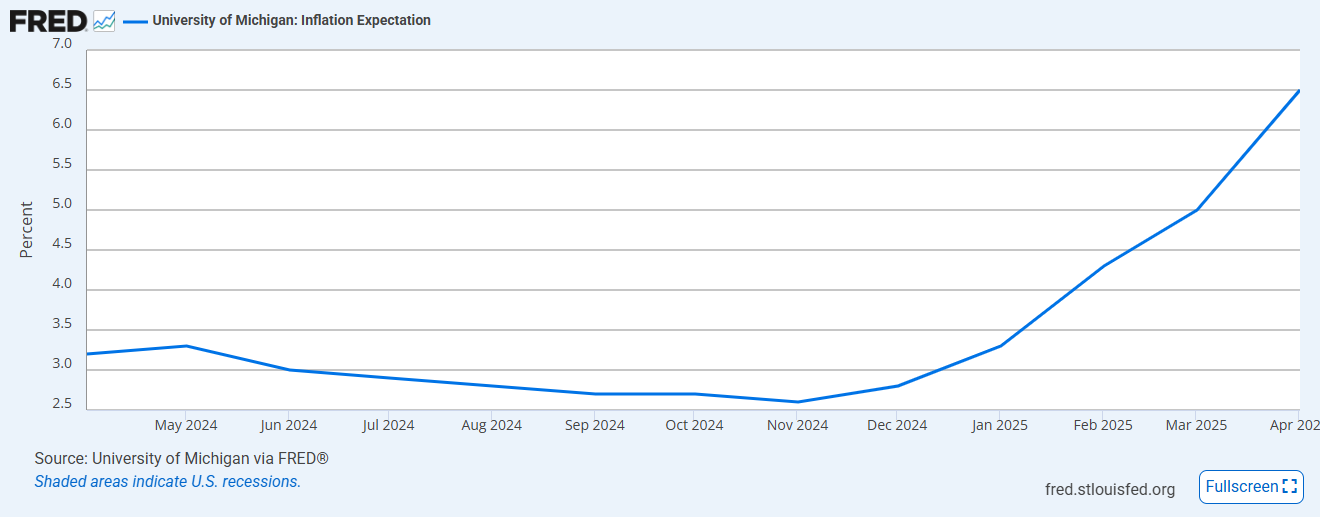
This survey data shows that inflation one year from now is expected to be 6.5%. Most likely, there is some overestimation on the part of the survey takers to account for tariff related price hikes.

Sentiments

Consumer Sentiments

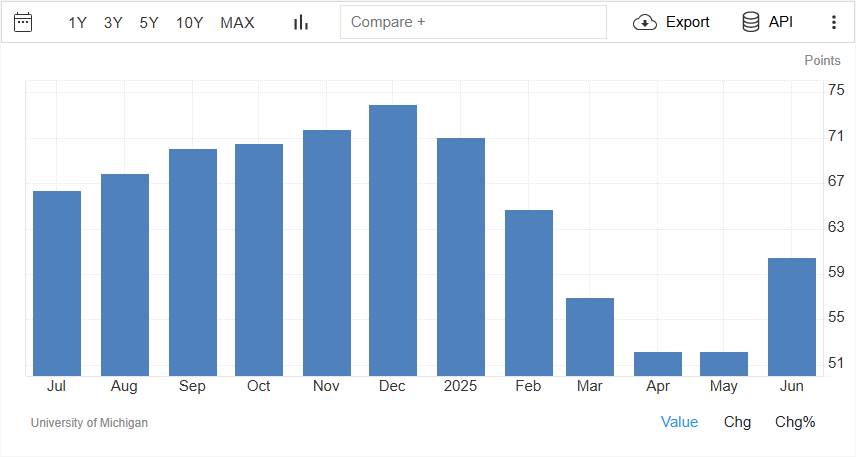
University of Michigan's consumer sentiment has continuously declined every month of this year except for a rebound this month. For June, the reading is at 60.5. Certainly, the consumers seem to be enjoying the reprieve in tariffs.

Investor Sentiments

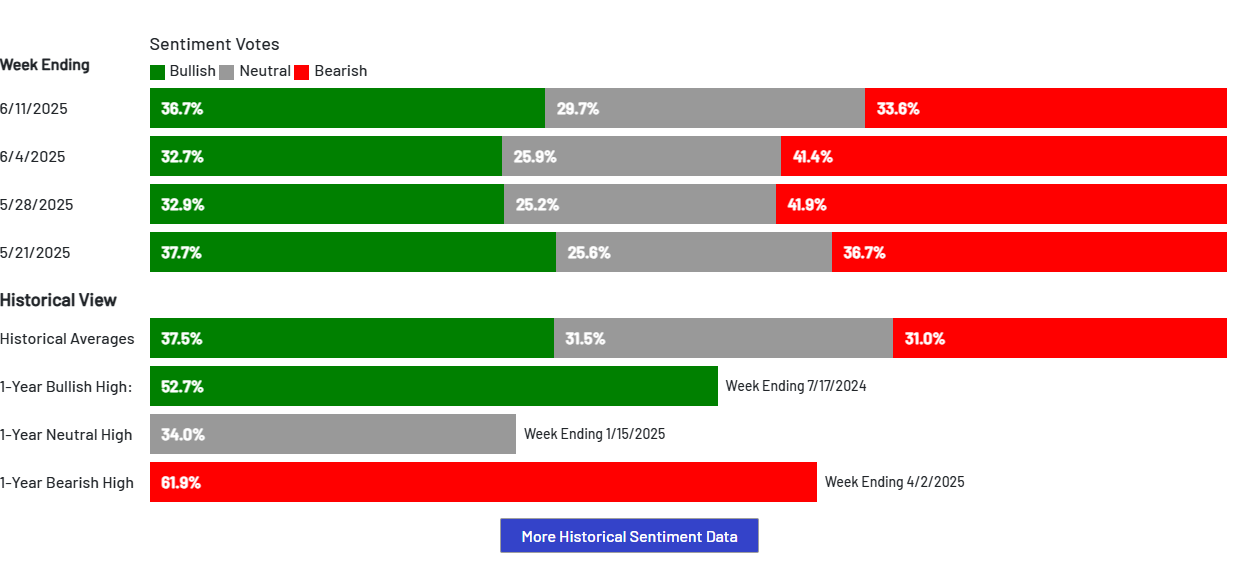
The AAII sentiment has been rebounding from a bearish stance a month ago.
GDP Factors

Manufacturing PMI

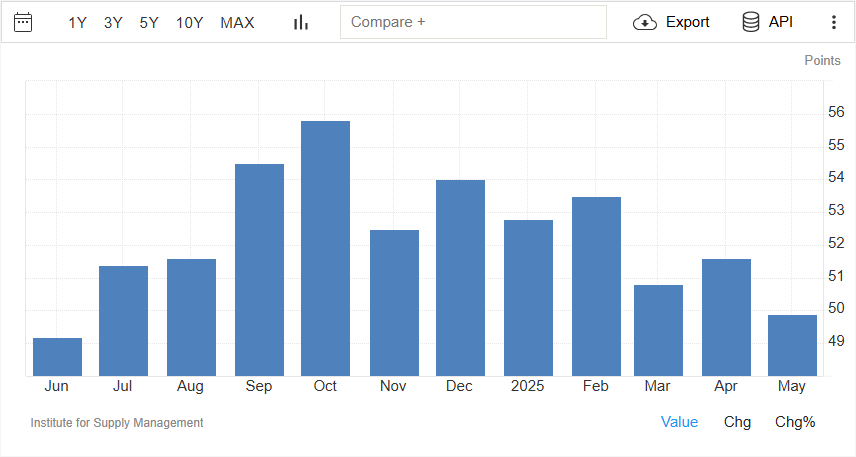
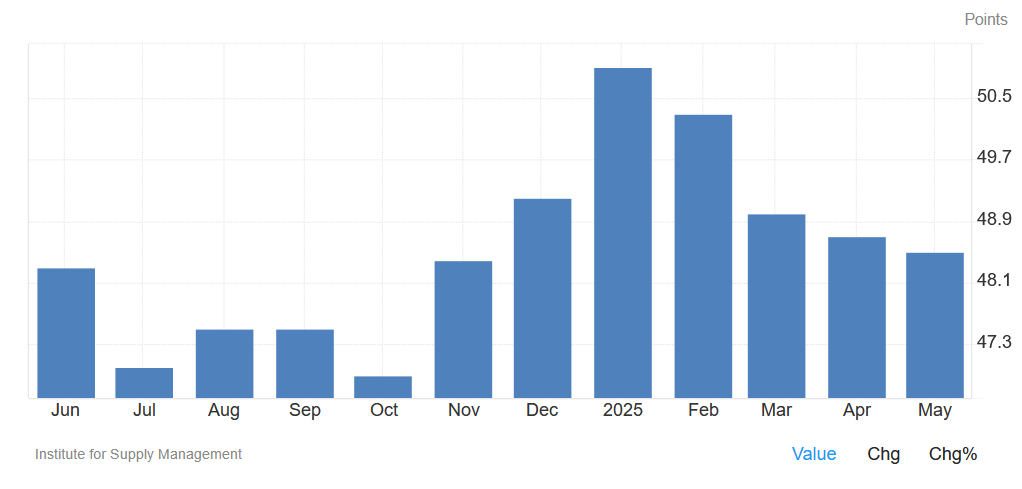
After turning positive earlier this year, Manufacturing PMI has turned negative for the last three months; the latest reading is 48.5 this month.

Services PMI

ISM non-manufacturing number is below 50 since a long time ago for the first time. The reading is 49.9 this month.

Industrial Production

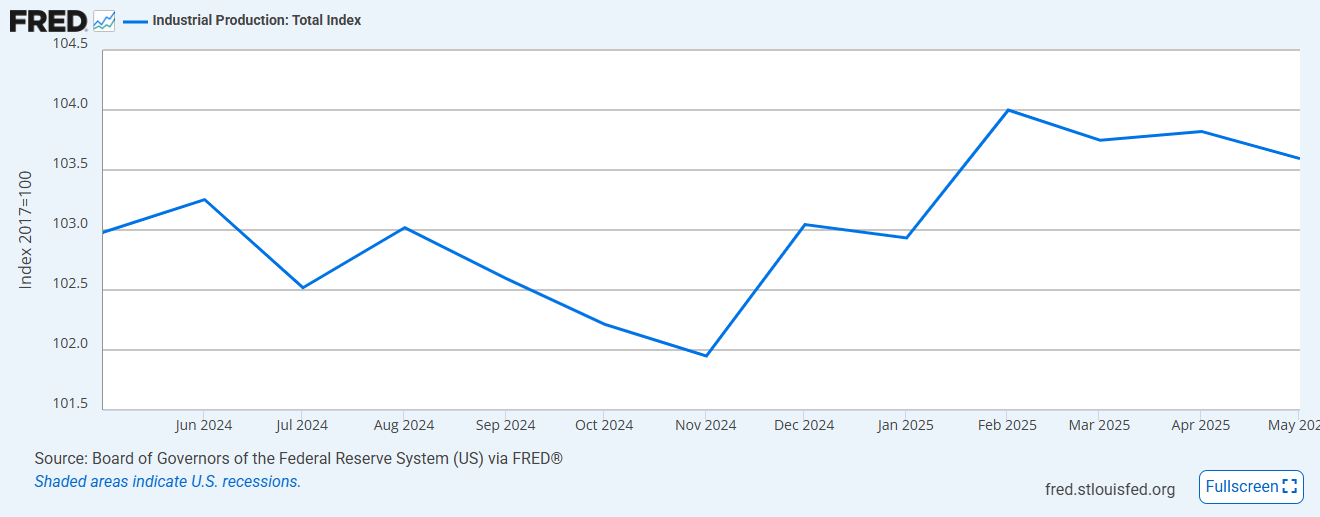
Industrial Production has remained positive through the last year and is showing an uptick in activity.

Retail Sales

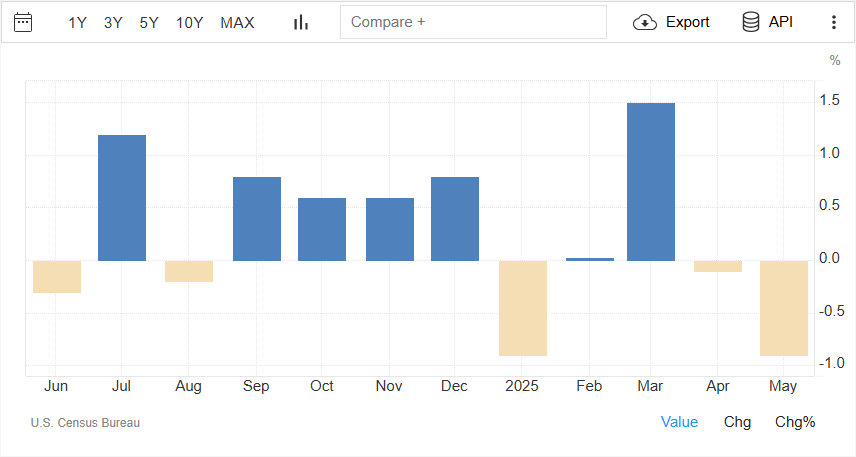
Retail Sales is at -0.9% this month. Very likely this downward correction is due to the lull after the pull forward in demand earlier this year as consumers front ran tariffs for their purchases.

Non-farm Payrolls

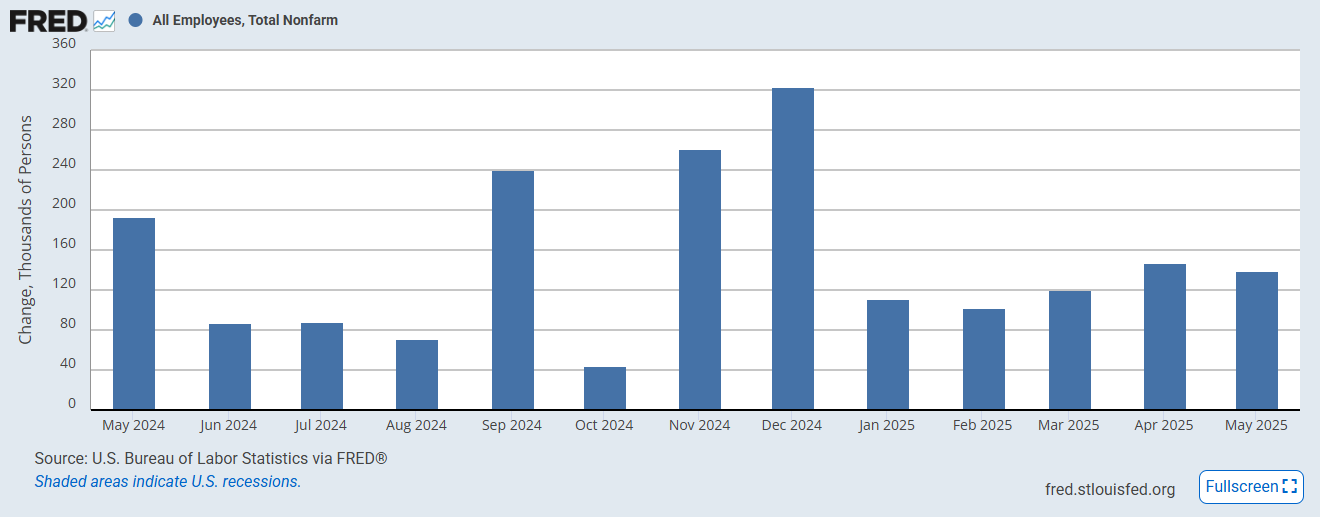
Non-farm payrolls remain robust indicating economy is still adding jobs. This month the jobs number came in at 139k jobs.

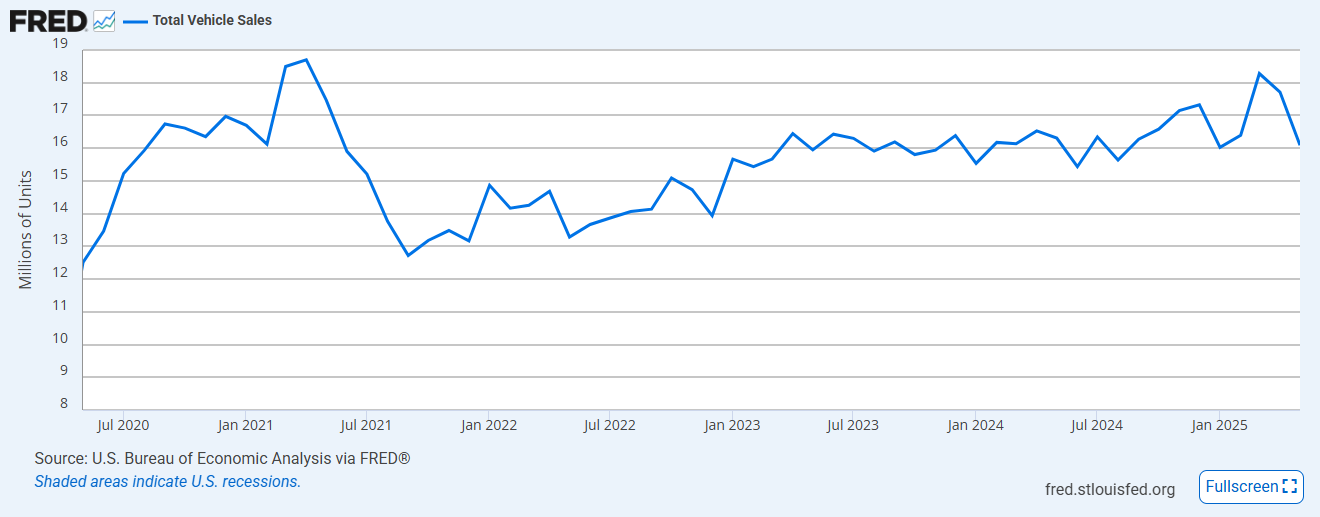
Total Vehicle Sales

Total Vehicle sales are picking up, probably people are buying cars before the tariff pushes the prices higher.

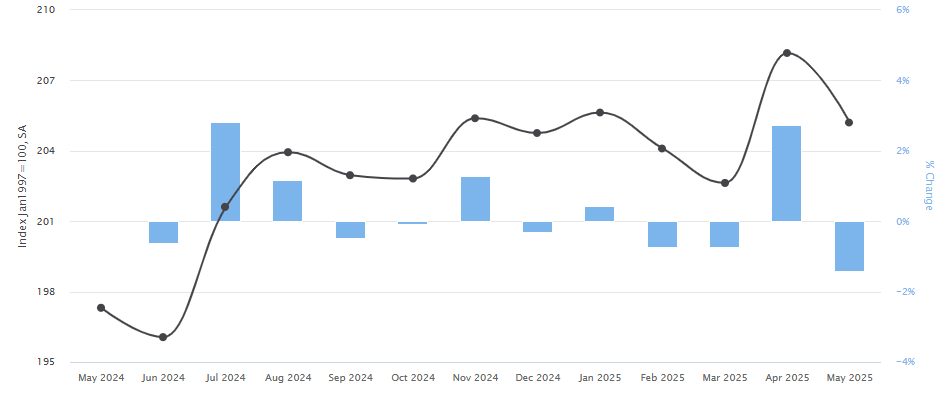
Manheim Used Car Index

Used car prices have seen a sharpe increase in the last month. This could be another impact of tariffs as the supply chain of car manufacturing gets gummed up, more consumers are turning to used cars instead of new ones.

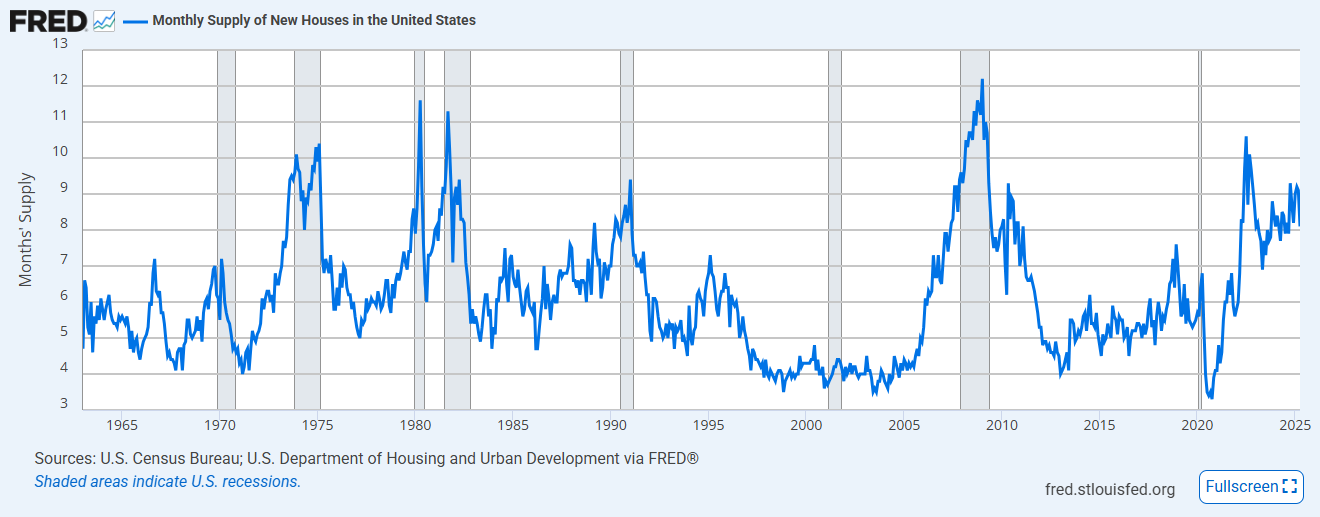
US New Home Sales

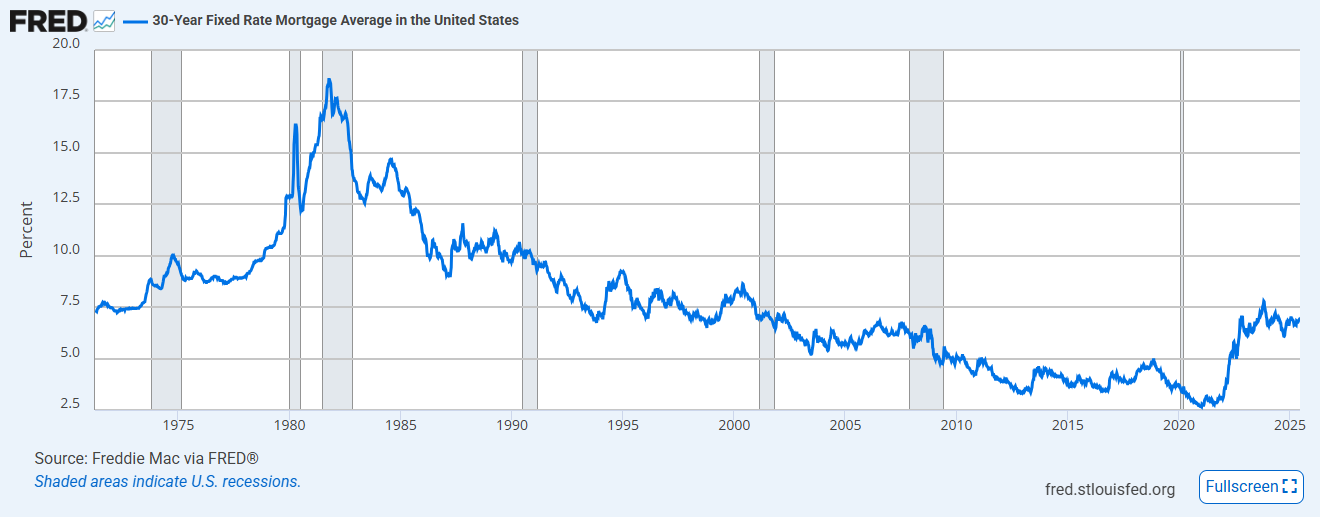
New home sales have been moderately trending higher even with high mortgage rates.

30 Year Fixed Mortgage Rates

The mortgage rates have followed the 10-year Treasury yield higher over the last few weeks.
Employment Indicators

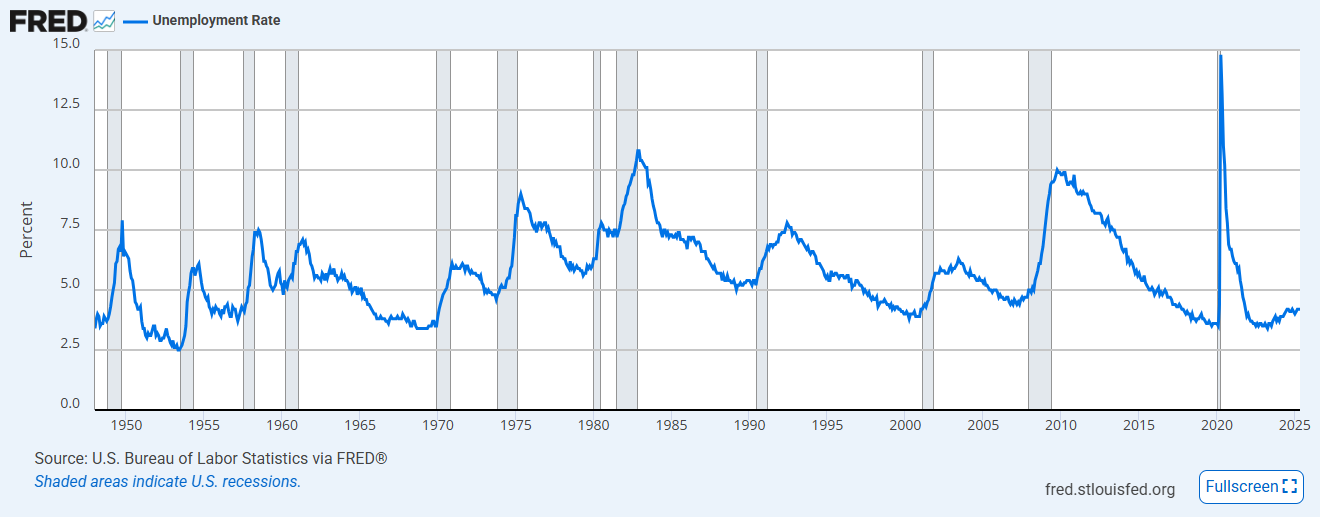
Historical Unemployment Rate

The unemployment rate has remained low. This indicator is a lagging indicator. We do expect to see this number creep up if recession becomes imminent. This month, it remained steady at 4.2%.

US Jobless Claims

Source Initial Jobless Claims
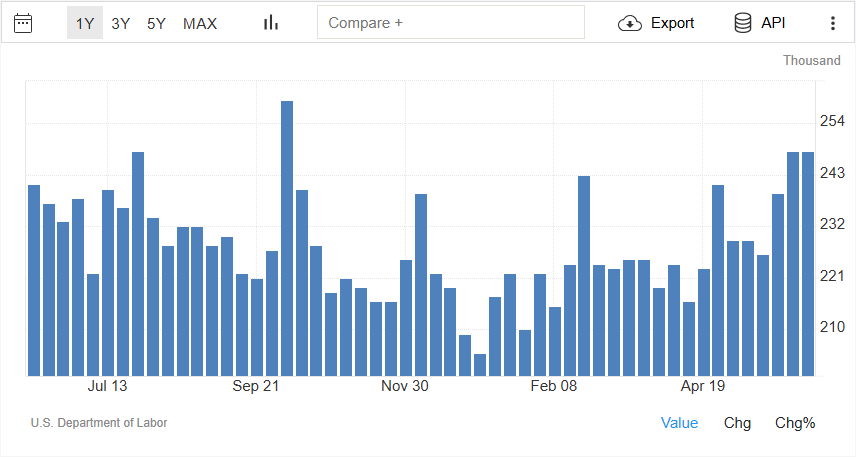
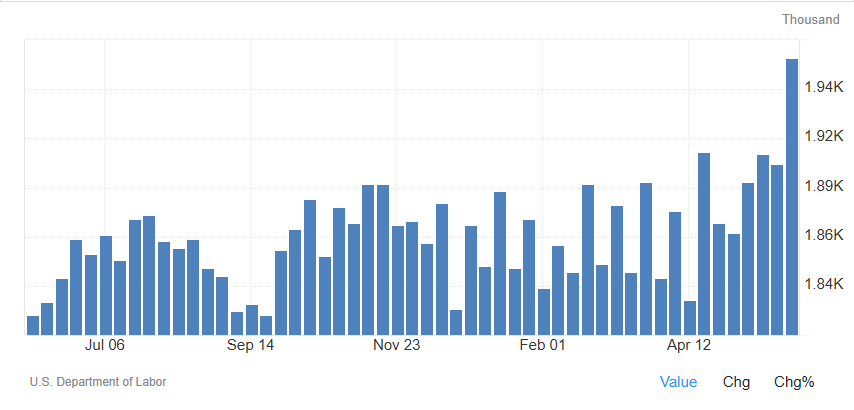
This chart will be the first indicator of a telltale sign that unemployment is increasing. As you see the continuing jobless claims number rise, it implies the people who lost their jobs are not going back to labor force fast enough and the unemployment rate is starting to creep higher. Over the last couple of weeks, it has remained roughly flat.
Source Continuing Jobless Claims

Market Indicators

Yield Curve Inversion

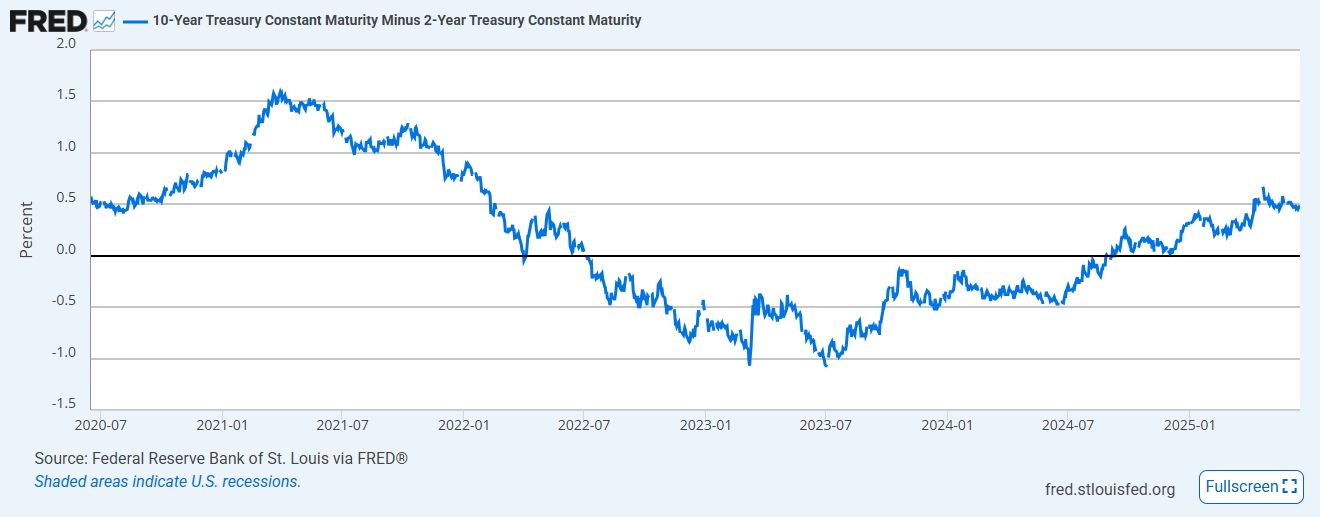
The yield curve is staying normal - 10 year constant maturity minus 2 year constant maturity is about 0.49%.

Yield Curve - then and now

Yield curve - Then
Yield curve - Now
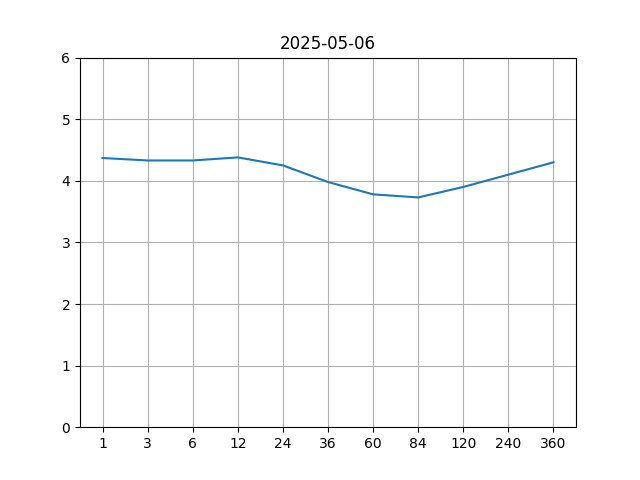
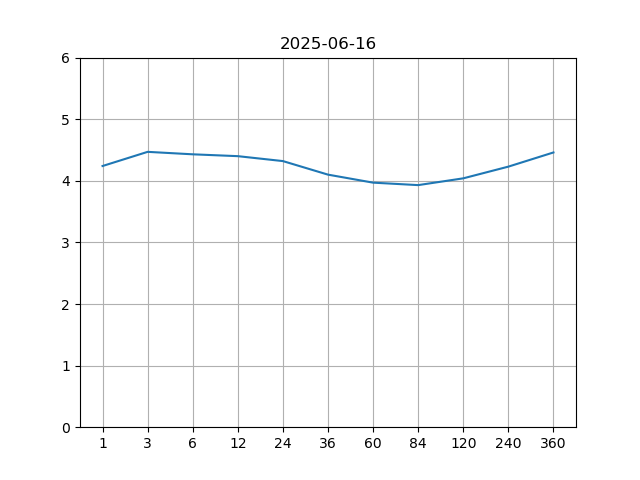
The yield curve is certainly reverted back to normal. Over the last few weeks, the long end of the rates have edged higher. The FED is likely to keep the short term rates where there are for some more time until the tariff uncertainties are behind us.

Market Sectors

Since the China deal, the markets have bounced back from the April lows. The old economy is shining this year with utilities and industrials leading while consumer discretionary is lagging.

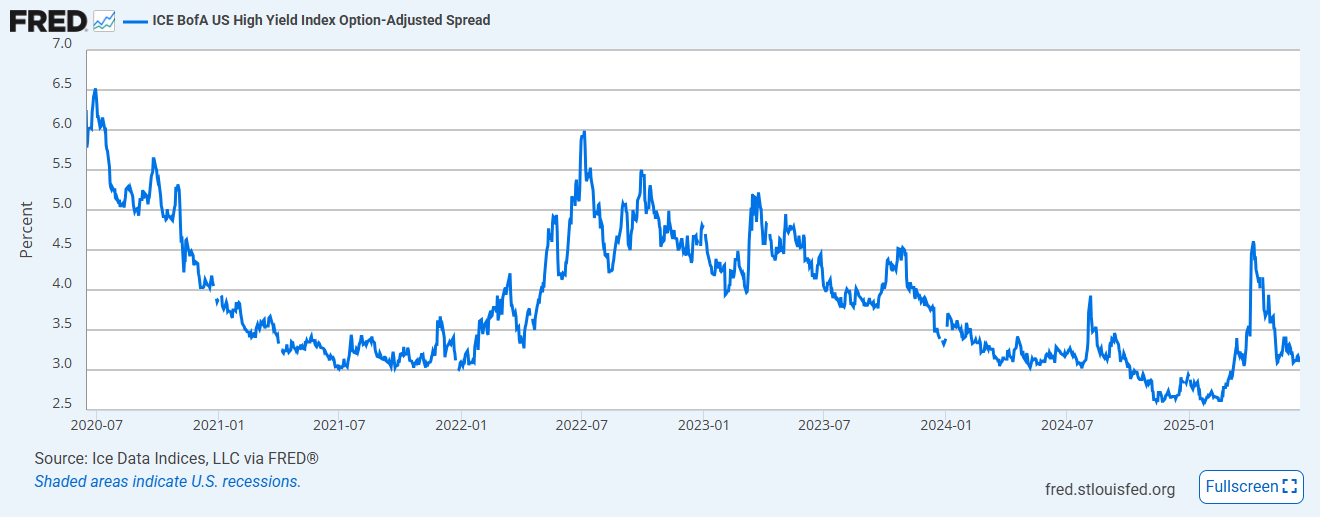
High Yield Index Options-Adjusted Spread

If the economy were to enter a recession, it is likely that some of the companies will struggle to keep up with their debt payments causing their credit spread to widen. This indicator shows how the credit spreads have been behaving well so far even in the face of the Yen carry trade unwind.

The spread is 3.1% currently and sharply rolled over since the April market correction.
Put Call Ratio

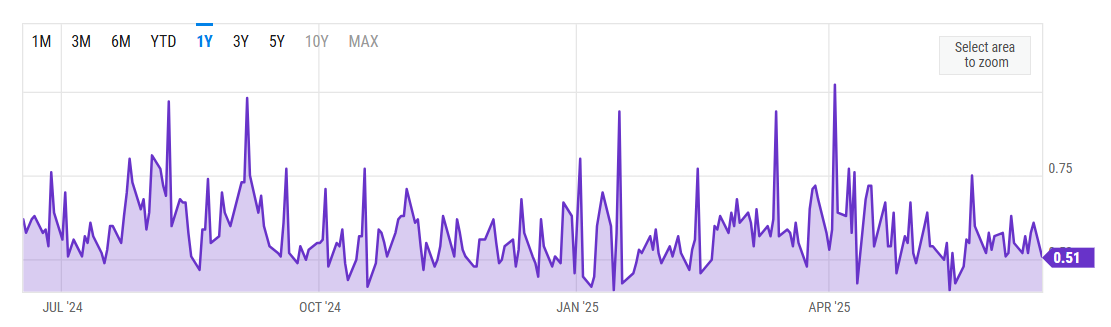
A spike in put / call ratio indicates that investors are very apprehensive about a sudden fall in the equity markets. The last spike seen is around April 2nd, liberation day.

S&P 500 Current Valuations

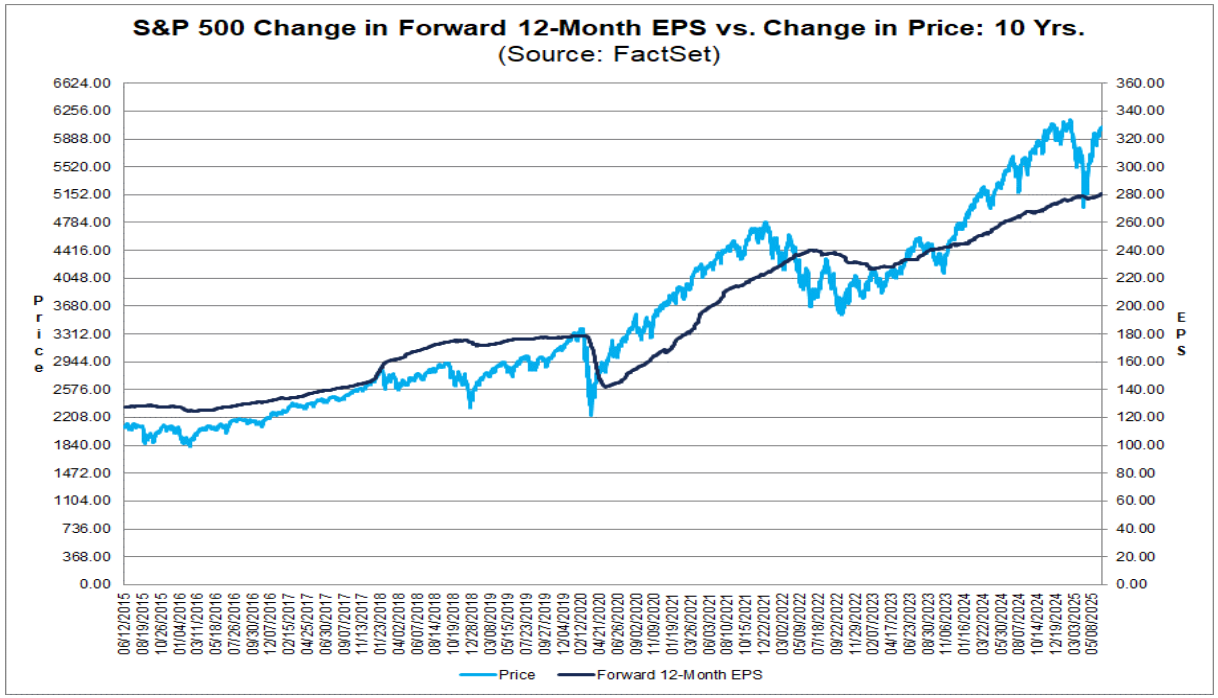
The current earnings forecast by equity analysts estimate the earnings potential for S&P 500 companies to be around $280 which translates to a price to earnings ratio of 21.6 at the current S&P 500 price level. This is above the 5 year and the 10 year averages. After the tariff tantrum, we have seen some forward guidance being pull by some S&P 500 firms. However, the earning growth has continued to be positive.